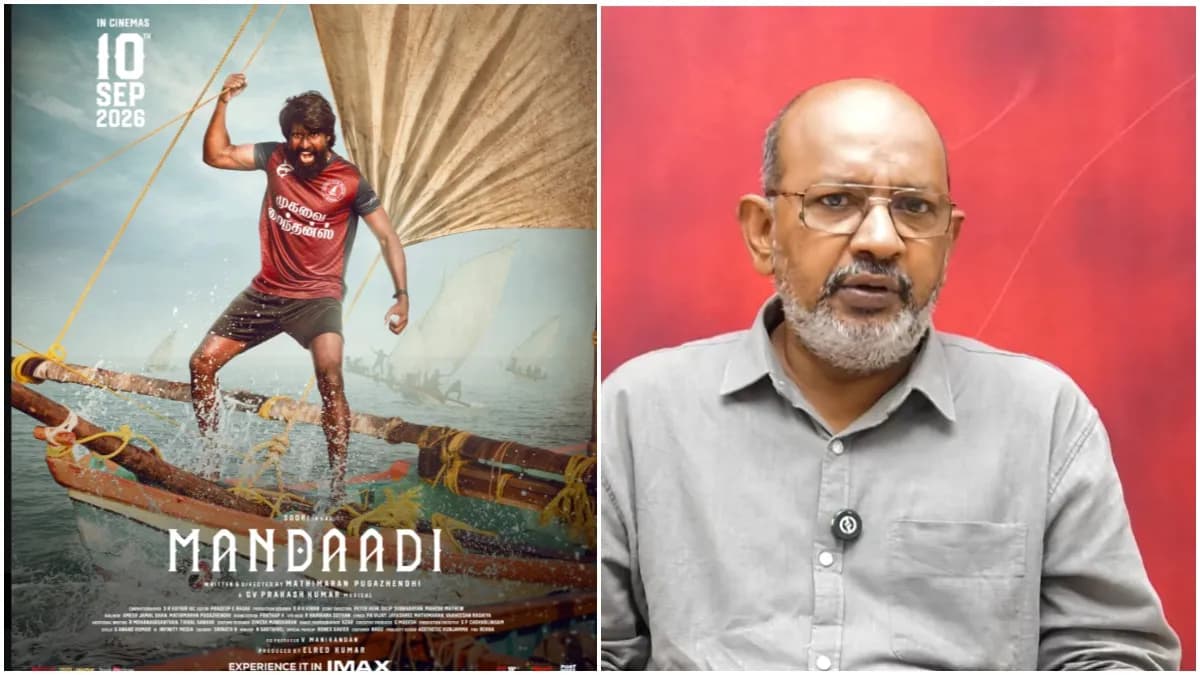
The Tamil film "Mandadi" has drawn sharp criticism from actor and commentator Sayaru Balu, who argues that the movie leans too heavily on visual embellishment while its narrative remains muddled. His remarks, delivered as a pointed review rather than a casual comment, have stirred discussion among audiences who follow his takes on cinema and storytelling craft.
Balu's central complaint centers on what he describes as excessive build-up - the kind of prolonged, stylized scene-setting that promises a grand payoff but never quite delivers.
A Story That Never Finds Its Footing
According to Balu, the film's biggest failure lies in its screenplay. He contends that the plot meanders without a clear sense of direction, leaving viewers to piece together motivations and stakes that should have been established early on. In his view, a movie can survive nearly any technical shortcoming if its core story holds together, but "Mandadi" inverts that priority.
His critique doesn't dismiss ambition outright. Instead, it questions where that ambition was directed. Lavish frames and dramatic staging, he suggests, cannot compensate for a script that lacks a coherent spine. When the foundation is shaky, every subsequent layer - performance, music, editing - struggles to find its purpose.
That argument carries particular weight in Tamil cinema right now, where audiences have grown increasingly vocal about distinguishing between surface-level spectacle and genuine narrative craft. Viewers are quicker than ever to call out films that feel assembled around moments rather than built on story.
The Tension Between Style and Substance
Balu's remarks tap into a long-running debate within the industry about the balance between production value and writing. Bigger budgets have made it easier to create striking visuals, but they haven't solved the harder problem of constructing a story that earns its emotional beats. A film can look expensive and still feel empty.
What makes Balu's criticism notable is his framing: he doesn't treat the over-the-top presentation as neutral decoration. He treats it as a distraction - something that masks weaknesses rather than addressing them. In his assessment, the build-up actively works against the film, raising expectations the screenplay cannot satisfy.
This isn't a fringe position. Critics and audiences alike have repeatedly rewarded tightly written films over sprawling, effects-driven ones, even when the latter carry far larger marketing pushes. Word of mouth has become the dominant force in determining whether a movie sustains its run beyond the opening weekend, and that word spreads fast when viewers feel misled by a trailer that promised more than the film delivered.
What This Means for Aspiring Filmmakers
The broader takeaway from Balu's critique is practical rather than personal. For writers and directors, it reinforces a basic lesson: clarity is not the enemy of ambition. A complex story can still be told with precision. Confusion is not depth.
His comments also highlight how reviewers and commentators shape audience expectations in the Tamil film space. When a well-known figure speaks plainly about a movie's flaws, it can influence whether casual viewers decide to buy a ticket at all. That influence cuts both ways - it can elevate smaller films that deserve attention and warn audiences away from productions that rely on hype alone.
It's worth noting that Balu's review focuses on craft rather than personal attacks. He doesn't question the effort behind "Mandadi" or the sincerity of those who made it. His objection is structural: the storytelling didn't do its job.
The Larger Conversation
Discussions like this one tend to outlast the specific film that sparked them. The question of whether Tamil cinema is prioritizing style over substance has surfaced repeatedly over the years, and it resurfaces whenever a high-profile release divides audiences. "Mandadi" now sits within that ongoing conversation.
Whether the film finds defenders who see its approach differently remains to be seen. Every release attracts a range of responses, and a single critic's view - however prominent - rarely represents the whole picture.
What Balu has done is articulate a frustration many viewers share: the feeling of sitting through a movie that looks impressive but never quite explains itself. That frustration, more than any specific plot point, is what gives his critique its resonance. It speaks to a common experience rather than an isolated opinion.
For now, "Mandadi" continues to generate discussion, and Balu's assessment has become part of that debate. Whether audiences agree with him or not, his remarks have sharpened the conversation around what makes a film work beneath its surface - a question that will keep mattering long after this particular release fades from theaters.
Source: Filmibeat Tamil