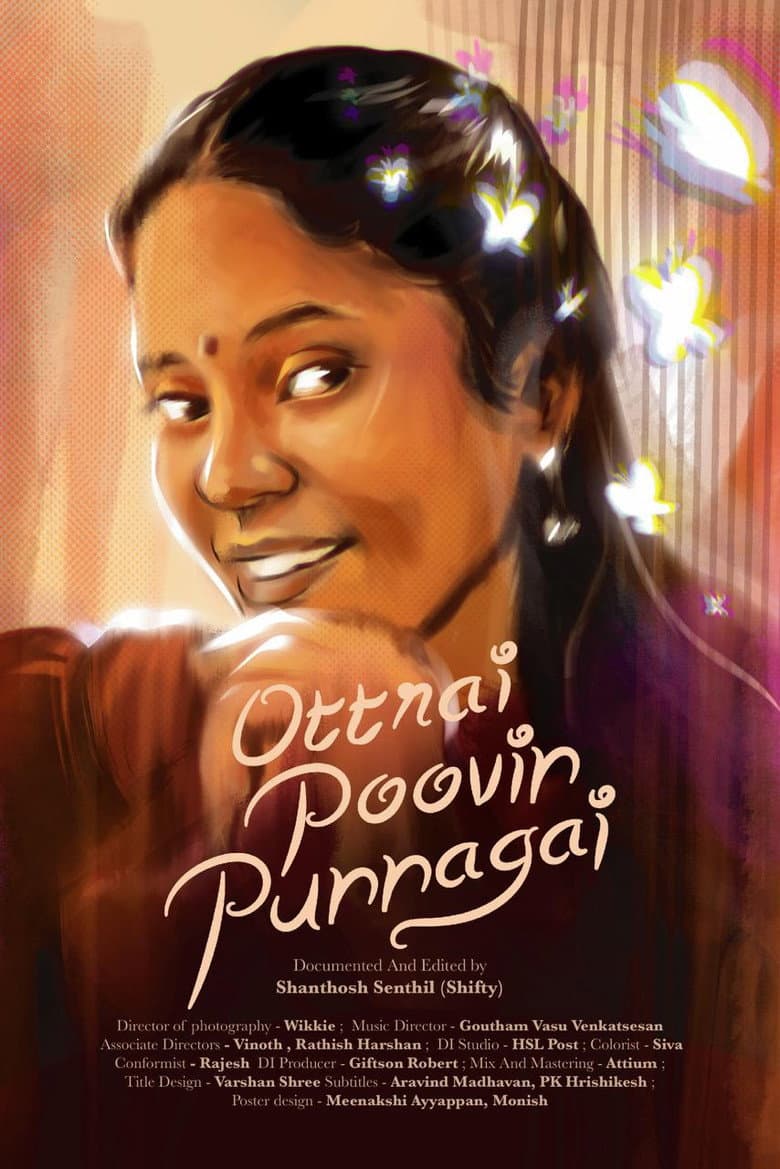
There is a particular kind of quiet that settles over a Bharatanatyam classroom in Chennai just before the first beat of the nattuvangam. It is the sound of breath being held, of anklets waiting to speak. Shanthosh Senthil's documentary "Smile of a Single Flower" - known in Tamil as "Ottrai Poovin Punnagai" - lives inside that quiet. Clocking in at just 56 minutes, this intimate portrait turns the camera on the director's own mother, Rajalakshmi Senthilkumar, a Bharatanatyam teacher whose life has been measured not in performances staged but in students shaped. It arrives in theatres on November 7, 2026, and it promises something increasingly rare in Tamil cinema: a documentary that asks us to sit still and simply look at a life lived well.
Release Date & Where to Watch
Mark the calendar for November 7, 2026. The film opens in Tamil Nadu on that Friday, and given its modest runtime and documentary nature, expect a limited but deliberate theatrical footprint - a release pattern that has served intimate Tamil documentaries well in recent years. For those who miss it on the big screen, the film's brief runtime and personal scale make it a natural fit for streaming pickup later in the season, though no platform has been confirmed at this time. What is confirmed is the language: this is a Tamil-language documentary, made within the Kollywood ecosystem, and it will play in its original Tamil. Audiences in Chennai, Coimbatore, Madurai, and the usual metro multiplexes should keep an eye on listings as the date approaches; word of mouth will likely determine how widely it travels beyond the first week.
Cast & Crew
The cast list here is deliberately unglamorous, and that is the point. The film features Rajalakshmi Senthilkumar as herself - teacher, mother, keeper of a tradition - alongside the students and family members who populate her world. The unnamed ensemble matters less than the presence at the centre. At the helm is director Shanthosh Senthil, who brings an obvious personal stake to the material: this is a son filming his mother, and that closeness is both the film's engine and its ethical tightrope. There is no composer or star wattage to speak of in the conventional sense; the rhythm here comes from the dance floor itself. As of now, the film carries no audience rating, which is unsurprising for a title that has yet to open. Everything about this production feels handmade, from its fifty-six-minute runtime to its refusal to pad itself with talking heads. It is the kind of project that lives or dies on trust - between filmmaker and subject, and between film and viewer.
Story & What to Expect
The premise is deceptively simple. "Smile of a Single Flower" captures the life of Rajalakshmi Senthilkumar through the eyes of her son, and in doing so examines two roles at once: the mentor and the woman behind the mentor. We are told the film celebrates her work as a teacher, but also that it reveals "the simple, beautiful moments of a small girl whose life blossomed through dance, passion, and devotion." That phrasing is telling. The film seems to move in two temporal directions at once - tracing the arc of a young girl who found herself in dance, and observing the woman she became, now guiding others toward the same discovery.
Expect a gentle, observational texture rather than a conventional biographical sweep. There are no dramatic reenactments promised here, no archival montage blitz. Instead, the documentary appears built from the ordinary fabric of a Chennai dance school: the morning warm-ups, the corrections, the small frustrations, the moments of sudden grace when a student finally holds a posture without thinking. The son's perspective frames it all, which means the film is as much about watching a parent as it is about the parent herself - the strange tenderness of seeing someone you know intimately become someone slightly different in the presence of their students. At under an hour, it cannot be exhaustive, and it doesn't try to be. It aims for a portrait, not a biography. Anyone expecting a career retrospective or a history of Bharatanatyam should adjust expectations; this is a film about one woman, one classroom, and the small girl still visible inside both.
Why It's Worth Watching
Tamil cinema produces spectacle by the tonne, but it rarely produces stillness. "Smile of a Single Flower" offers exactly that - a chance to watch a tradition being handed down, one student at a time, without the noise of a commercial release demanding your attention every three minutes. The film's greatest asset is its intimacy. A son documenting his mother is a vulnerable act, and when it works, it produces a portrait no outsider could replicate: unguarded, affectionate, and honest about the small frictions that come with family.
There is also something quietly radical about centring a woman whose life's work has been cultural transmission. Dance teachers are the unglamorous backbone of Bharatanatyam; they rarely get documentaries. And the decision to look back at the "small girl" whose life blossomed through devotion gives the film an emotional through-line that should resonate well beyond dance enthusiasts. Fifty-six minutes is a small ask. For anyone who has ever sat in a Chennai classroom at dawn, or who has watched a parent become their truest self in the presence of their work, "Smile of a Single Flower" looks likely to leave a mark. It may be one flower, but it smiles all the same.