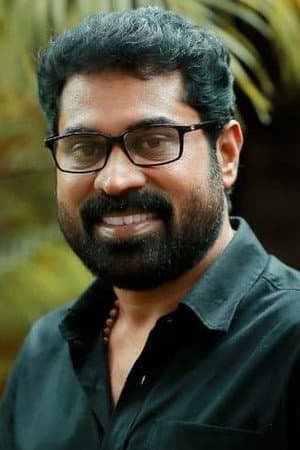
Suraj Venjaramoodu is a Malayalam film performer whose Tamil work sits alongside a far longer career in Malayalam cinema. He is a National Award winning Indian film actor and impressionist with more than 200 Malayalam films behind him, mostly comedies, with character roles mixed in. A short vocabulary note for readers outside the region: Malayalam cinema is the film industry of Kerala, and Tamil cinema is the industry of Tamil Nadu. Performers cross between the two industries regularly, and the traffic runs in both directions.
This is a career feature, not a review. It follows the shape of a small Tamil filmography, four titles in all, and asks what each one shows about how he is used on this side of the border: the quiet 2019 film that asked for restraint, and the three named parts that followed in 2026.
The Four Tamil Films and What Each One Does
Peranbu (2019)
Peranbu rests on a single father trying to raise his daughter, who has cerebral palsy, even as she begins to wake up to her sexuality. It is not an easy premise, and it does not ask for an easy performance. What the film requires is restraint, patience, a father's steadiness rather than a comic turn. That is a particular demand on any performer: to hold a scene without reaching for a laugh, to let a long silence sit, to carry domestic difficulty in the body rather than in dialogue. The brief does not confirm the specific part he plays, and this piece does not guess at it. What can be said plainly is that a film of this kind tests an entirely different set of muscles from the comedy that built his reputation.
The 2026 Cluster: Jailer 2, Kara, Youth
Three Tamil films followed in 2026, and together they show how widely he can be placed. In Jailer 2 he plays Dileep. The plot has a retired jailer, Tiger Muthuvel Pandian, going undercover as a driver to protect his family when a dangerous syndicate threatens its peace. A named role in a large-scale action film is a different kind of placement from the quieter work above: the frame is big, the stakes are physical, and the performance has to fit inside a machine built for scale. In Kara he plays Bharathan. The story follows a thief who tries to go straight, but predatory banks trap his father in debt, and he returns to crime while a determined cop closes in. Debt and family pressure sit at the centre of it, the kind of material that rewards a performer who can play ordinary worry without decoration. In Youth he plays Unnikrishnan. The film follows Praveen, a 15-year-old who enters adolescence set on finding true love before school ends, moves through relationships and heartbreaks, and slowly learns what love means. It is a coming-of-age story, and the brief does not confirm what function Unnikrishnan serves within it. The spread is the point: three films, three named parts, three very different kinds of story, inside one year.
What Connects the Work, and Why the Name Travels
Roles and Subjects He Returns To
Pull the threads and a pattern appears without any forcing. Family under pressure runs through the Tamil work: a father raising a daughter in Peranbu, a father trapped in debt in Kara. Two very different films, but the same quiet subject underneath both. Comedy is his long established base in Malayalam cinema, and the Tamil work shows the range on either side of it rather than the comedy itself. His background explains part of that fluency. He started as a stand-up comedian, and his mimicry shows found an audience; that training in timing and imitation is useful equipment for a performer who has to move between registers. It should not be mapped directly onto any Tamil role, because the brief does not support that. It is background, not a reading of a part.
Recognition, Stated Plainly
Recognition here means how the industry and audiences register a performer's work over time. He is a three-time recipient of the Kerala State Film Award for Best Comedy Artist, and he received the National Film Award for Best Actor in 2014 for the Malayalam film Perariyathavar. Those are the honours that belong to this account, and they belong to his Malayalam career. None of them attach to the Tamil films, and this piece does not extend them there. The useful way to read it is simpler: the Tamil work is where a viewer outside Kerala meets a performer who was already well established elsewhere. The awards explain why the name carries weight before a single Tamil scene has played. For background on how Indian film honours are structured, the National Film Awards are a reasonable starting point, and mainstream coverage of Indian cinema is collected by outlets such as The Hindu.