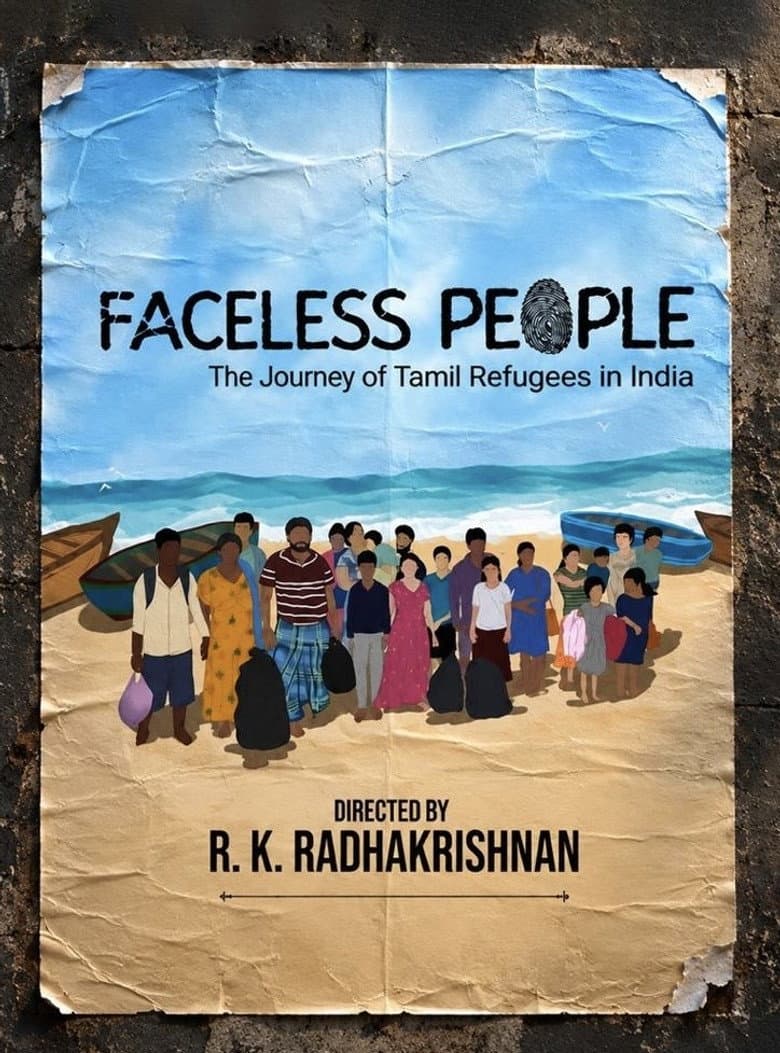
The Tamil documentary space has been quietly gathering momentum over the past few years, and November brings one of its most emotionally charged entries yet. Faceless People - The Journey of Sri Lankan Tamil Refugees in India arrives in theatres on November 14, 2026, and it promises to turn an often-overlooked chapter of South Asian history into an intimate, human-scale portrait. Directed by journalist-turned-filmmaker R.K. Radhakrishnan, the film runs just 23 minutes - brief, but by all indications remarkably dense with lived experience.
Release Date & Where to Watch
The documentary is set for a theatrical release on November 14, 2026. For a short-format documentary, a big-screen outing is a deliberate choice: it gives the subjects' voices a public platform that streaming algorithms rarely afford films of this scale. Audiences in Tamil Nadu, where much of the refugee community has been based for decades, will likely be the first to receive it. Details on wider distribution, festival screenings and eventual streaming availability have not yet been announced, so fans of serious non-fiction cinema should keep an eye on official channels as the release date approaches. Given the film's subject matter and its compact runtime, expect it to feature prominently in documentary circles and among socially engaged audiences well beyond its opening weekend.
Cast & Crew
The cast is listed as unknown, and that is entirely by design. Faceless People does not rely on professional actors; its on-screen presence comes from six Sri Lankan Tamil refugees living in India, drawn from different age groups, who speak directly to camera about their lives. Their anonymity in the credits mirrors the film's title - these are people whose stories rarely make headlines, whose faces are seldom seen in mainstream coverage. What they offer instead is testimony, and that is the engine of the entire project.
At the helm is R.K. Radhakrishnan, whose background in journalism informs what looks to be a rigorously reported, interview-driven approach. The film is produced within the Tamil film industry, and it is presented in Tamil. With a runtime of 23 minutes, the crew's task was clearly one of discipline - distilling more than three decades of displacement into a tight, potent narrative. Composer and technical credits have not been publicly detailed, but the documentary's pared-back format suggests craft in service of story rather than spectacle. TMDb currently lists the film with a rating of 0/10, which simply reflects that no audience votes have been registered yet - not a verdict on its quality.
Story & What to Expect
The premise is deceptively simple. Six refugees, spanning generations, describe life inside the camps of Tamil Nadu and the hopes and aspirations that have sustained them through an unresolved present. But behind that simplicity lies a sprawling, painful timeline: for over three decades, Sri Lankan Tamil refugees have lived in Tamil Nadu in what the film calls a protracted situation - without certainty about their future and without viable policy solutions.
Three generations have grown up in this limbo. Children born in the camps know no other home; their parents arrived with memories of a country they cannot safely return to; their grandparents carry the weight of the original displacement. What Faceless People appears to capture is the texture of that in-between life - the aspirations people cannot fulfil, the resilience that keeps them going, and the quiet, often unacknowledged economic contribution they make to the host communities around them. Expect talking-head testimony interspersed with observational footage, a structure that lets individual voices carry the emotional load rather than narration or dramatisation.
The film's refusal to prettify its subject is part of its appeal. There are no easy resolutions here - no policy prescriptions promised, no tidy endings. Instead, Radhakrishnan seems to be asking viewers to sit with the uncertainty his subjects live with daily, and to recognise the dignity in endurance. For audiences accustomed to documentaries that explain everything, this one trusts its six speakers to do the explaining themselves.
Why It's Worth Watching
First, timing. As debates around refugee policy and statelessness intensify across the region, a film that puts human faces - even deliberately "faceless" ones - to the numbers feels urgent rather than academic. Second, access: stories from inside the camps rarely reach general audiences, and the six participants here represent three generations of a community whose voice is too often filtered through secondhand reporting.
Third, craft. A 23-minute documentary is a demanding form; there is nowhere to hide, and every cut must earn its place. Radhakrishnan's journalistic instincts should serve the material well, keeping sentiment honest and sentimentality at bay. And fourth, the shared experience: watching this in a theatre, in Tamil, alongside others, is a different proposition from scrolling past a news clip. It restores collective attention to a story that has been allowed to fade.
Is it a crowd-pleaser? Not in the conventional sense. But for viewers who believe cinema should occasionally do more than entertain - who want their films to leave them thinking about someone else's life for days afterwards - Faceless People looks like essential viewing. Mark November 14 on your calendar. Some films demand to be seen; this one deserves it.