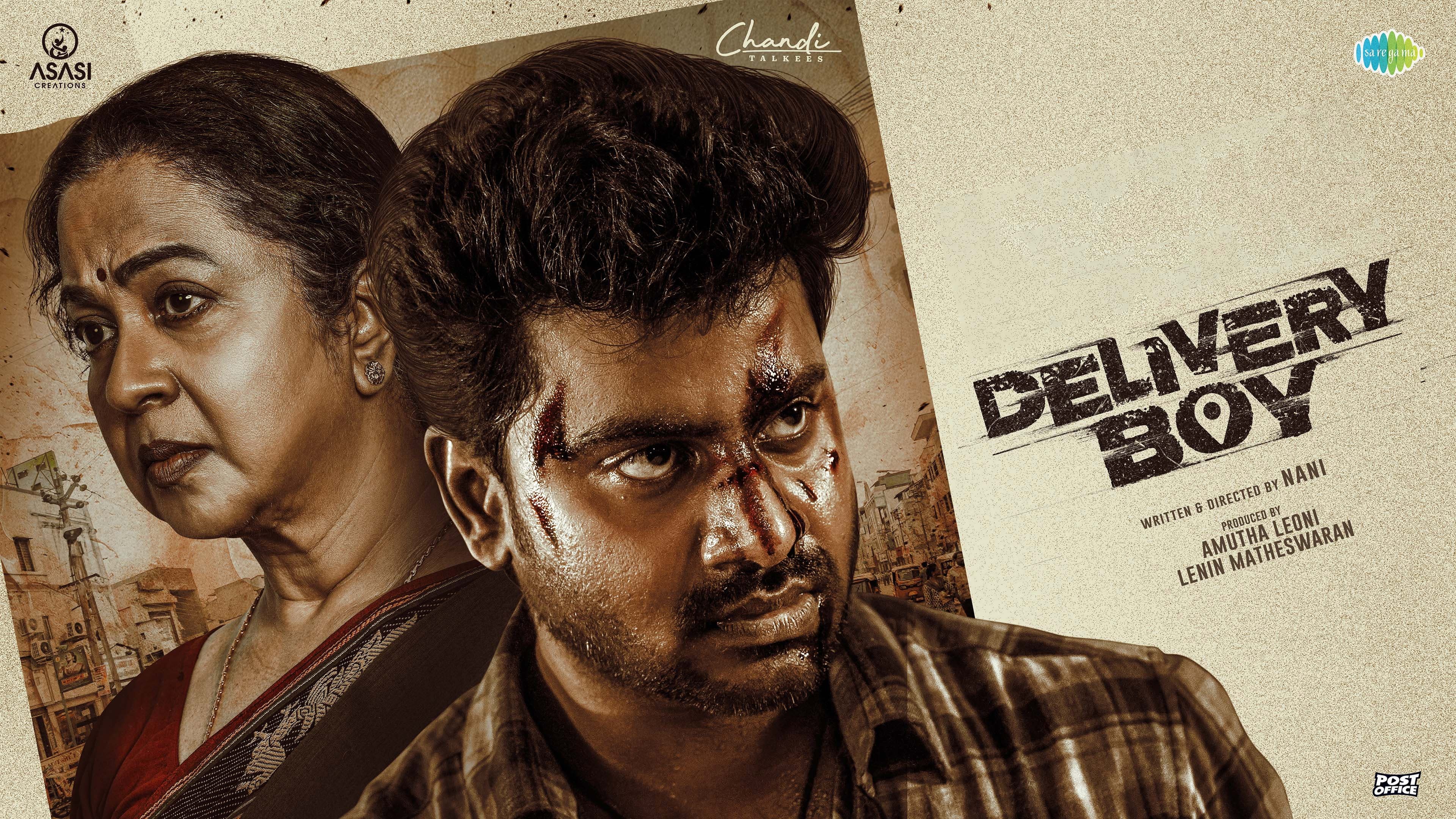
Theaters are about to get a jolt of adrenaline, and not just from the usual chase sequences. On September 4, 2026, Kollywood welcomes Delivery Boy, a film that trades the glossy, larger-than-life trappings of the genre for something grittier and far more morally complex. Directed by the promising Nani darla, this 133-minute action-drama isn’t just about a man on a bike; it’s about the impossible choices that define us, and the haunting ripple effects of a single, desperate act.
At the heart of this storm is Leo Sivakumar, delivering a career-defining performance as Siva Kumar. He’s not your typical action hero. Siva is a young man with a singular, noble dream - to wear the khaki uniform and serve as a police officer. But life, in its cruelest twist, has other plans. His world collapses when his mother, Lakshmi (a typically powerful Radhika Sarathkumar), suffers a critical injury that demands immediate, life-saving medical intervention. With no money and no time, Siva finds himself backed into a corner. The script, penned with a sharp awareness of social realities, poses a brutal question: how far would you go for the one person who gave you everything?
The first act sets this up with a suffocating sense of urgency. We watch Siva’s frustration mount as he zips through traffic, a cog in the gig economy, earning pennies while his mother’s life hangs in the balance. The decision to steal isn't glamorized; it’s a visceral, gut-wrenching compromise that Sivakumar portrays with raw, trembling vulnerability. He makes a choice that compromises his dream, his integrity, and his future. This is where the film plants its hook, because it doesn’t let him - or us - off the hook easily.
Then comes the twist that elevates Delivery Boy from a simple crime saga to a deeply human drama. Months after the theft, Siva is still haunted by his transgression, trying to piece together a semblance of a normal life. That’s when he stumbles upon a news report: a man has been falsely accused of murder. But it’s not just any man. It’s the very person Siva robbed - the individual whose life he unknowingly altered that fateful night. The narrative then shifts into a tense, ticking-clock thriller as Siva realizes that the only way to absolve his own guilt is to save the man he once victimized. He has to risk his own future - the police career he’s still clinging to - to right a wrong that has spiraled into a matter of life and death.
Director Nani darla demonstrates a confident handle on pacing, interweaving high-octane bike chases through crowded city streets with quieter, more introspective moments. The film’s visual language is grounded; the humidity of the Chennai streets feels palpable, and the constant motion of delivery riders becomes a metaphor for Siva’s own chaotic internal state. Darla doesn't shy away from the moral gray areas. The supporting cast is a treasure trove of Tamil cinema talent. Kaali Venkat brings his signature earthy gravitas as Karupu, likely a fellow rider or a street-smart ally, while Bose Venkat and Matheswaran add layers of institutional pressure as David and Govind Rajan, respectively. Young Jenson Dhivakar as Bala and Dusyanth as Goutham round out Siva’s circle, offering both camaraderie and conflict.
There is also a thread of romance, handled with restraint, starring Brigida Saga as Then Mozhi. She isn’t just a love interest; her character serves as a moral compass, representing the life Siva could have if he didn't carry the weight of his past actions. Saga brings a refreshing sincerity to the role, a quiet strength that contrasts with Siva’s turmoil. The chemistry between her and Sivakumar is subtle, never overpowering the central conflict, but adding a layer of poignant longing for normalcy.
What makes Delivery Boy particularly compelling is its refusal to offer easy solutions. The man Siva robbed isn't a saint, and Siva isn't a pure hero. He’s a flawed, frightened young man propelled by love and regret. The screenplay cleverly uses the "delivery boy" trope - someone invisible, constantly moving, carrying other people’s desires - as a symbol for the working-class struggle. Siva is always carrying something: food, packages, guilt, and ultimately, the responsibility for another man’s life. The film argues that heroism isn't about muscle or badges; it’s about the courage to face the consequences of your worst moment.
While the film doesn’t reinvent the wheel of the action-drama genre, its soul lies in its authenticity. The performances are uniformly strong, with Sivakumar proving he can carry a film on his shoulders with a quiet intensity that speaks volumes. Radhika Sarathkumar, even in limited screen time, delivers a heart-wrenching portrayal of a mother’s love and silent suffering.
Delivery Boy doesn’t boast a high-concept sci-fi hook or a massive star-studded ensemble. Instead, it offers something rarer in today’s blockbuster landscape: a sincere, character-driven story about redemption that doesn’t feel sanitized. It asks us to consider whether a bad deed can be undone by a good one, and whether forgiveness is something we grant others or must first earn for ourselves. As the credits roll, you won’t be thinking about the stunts (which are, by the way, brilliantly shot). You’ll be thinking about Siva Kumar, and the long, lonely road he had to travel to find his own humanity. This is a compelling, must-watch theatrical experience that proves Kollywood’s storytelling depth remains as potent as ever.