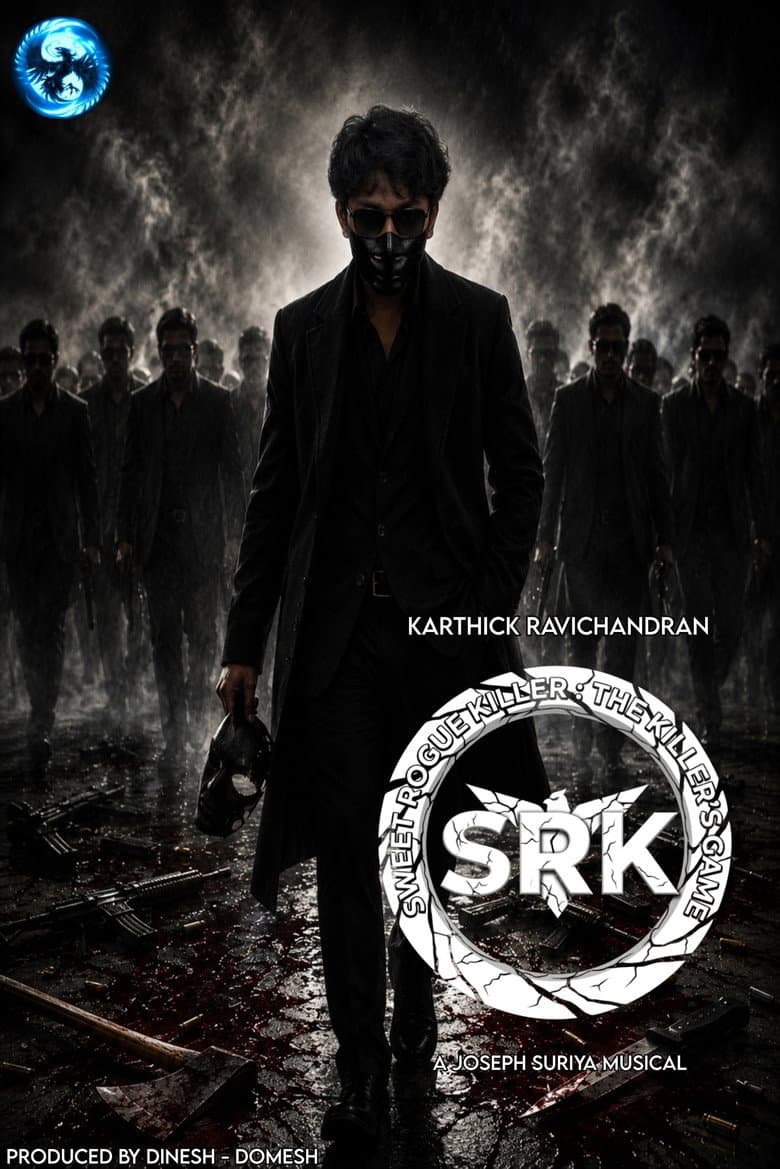
The last time we saw Sree Ranganathan Keerthik - better known to the underworld and the internet alike as SRK - he had just reduced the Forelli empire to rubble. It was a messy, kinetic, and surprisingly witty bloodbath that felt less like a finale and more like a victory lap. But Karthick Ravichandran, the writer-director-star of the Kollywood sensation Sweet Rogue Killer, isn’t one for clean endings. As the township tries to sweep up the ash and move on, Ravichandran pulls the rug out from under everyone with a sequel that swaps open warfare for something far more insidious: political legitimacy.
Opening in theatres on July 19, 2026, and clocking in at a lean, mean 40 minutes, Sweet Rogue Killer picks up almost immediately after the Forelli collapse. But the celebratory mood is short-lived. SRK discovers that the death of the empire was not the death of the family. One last Forelli - the seemingly naive Mario Forelli, played with a serpentine calm by Dhushyanth A - has survived. And rather than rebuilding through muscle and extortion, Mario has reinvented the bloodline through corporate shells, civic corruption, and a network of political puppets that stretch far deeper into the township’s administration than anyone suspected.
“It’s not about guns this time,” Ravichandran explains during a break in post-production, his voice carrying the exhaustion of someone who has spent months perfecting a single chase sequence. “The first film was a brawl. This one is a chess match. Mario isn’t trying to shoot SRK. He’s trying to make SRK irrelevant. That’s a scarier villain, because you can’t punch a government contract.”
The shift in tone is deliberate. While the film retains its genre-hopping DNA - Action, Crime, Comedy, Mystery - the comedy has grown darker, the mystery more procedural. SRK, ever the rogue, initially dismisses the threat as administrative boredom. But when his closest ally, the forensic accountant Anand Kumar (Pranav Kumar), is framed for embezzlement, and the stoic enforcer R K (Dinesh R K) is neutralized by a shady internal affairs sting, SRK realizes that Mario has been playing the long game. The heir isn’t hiding in a bunker; he’s running for a seat at the table.
The film’s mystery engine hums through a series of breadcrumbs. A missing hard drive. A whistleblower who dies of an “accidental” overdose. A cryptic warning from the flamboyant vigilante ‘Zoro’ Nelson (Akash G), who returns with a new mask and a chip on his shoulder. And then there’s Malak Subramaniyam, played by Sibi Velan, a fixer who has somehow survived three regime changes by never choosing a side until the last possible second. The ensemble bounces off each other with the frantic energy of a heist crew that doesn’t fully trust its own members.
“Everyone thinks they’re the hero in their own story,” says Dhushyanth A, describing his take on Mario Forelli. “Mario genuinely believes he is restoring order. He’s not twirling a moustache. He’s a businessman who sees SRK as an obsolete bug in a system that has moved past vigilantism. That’s what makes their confrontation so tragic - they both want the township safe, but they define ‘safe’ in opposite ways.”
Ravichandran’s direction leans into the absurdity of power. A mid-film montage juxtaposes Mario’s slick television interviews against SRK’s grimy, rain-soaked stakeouts. The colour grading shifts from the amber glow of the first film to a sterile, fluorescent blue for the political scenes. Kheshiq Haribaran and Arun Nagendra Gopalakrishnan, who appear as rival bureaucratic operatives, add a layer of farce to the proceedings - two men with identical briefcases and opposing loyalties who never stop stepping on each other’s toes.
But beneath the levity, there’s a pointed commentary on how crime adapts. “You can destroy a building,” Ravichandran muses, “but you can’t destroy an idea. The Forellis didn’t just deal in drugs; they dealt in favours. That’s why the sequel is a mystery. Because the real crime is hiding in plain sight, filed under public works.”
At 40 minutes, Sweet Rogue Killer is a whirlwind. There are no wasted scenes. A dinner conversation doubles as an alibi; a traffic stop reveals a mole. The runtime forces Ravichandran to keep the pacing razor-sharp, which suits his aesthetic - quick cuts, snappy one-liners, and fight choreography that feels brutally efficient rather than balletic. The title may say “Sweet,” but the final act is anything but. When SRK finally corners Mario, the confrontation is less a spectacular shootout and more a psychological dismantling - a verbal duel where the victor isn’t the one with the fastest draw, but the one with the most unflattering dossier.
The film ends with a promise of quiet, but anyone paying attention knows that in this universe, quiet is just the sound before the next scheme. As the credits roll, a mid-credits scene shows a single phone buzzing on an empty desk, the caller ID reading “Unknown.” The legacy isn’t over; it’s just changing hands again.
Sweet Rogue Killer may not reinvent the genre, but it does something rare: it treats the sequel’s premise with respect. It doesn’t just repeat the beats louder. It interrogates its own hero’s efficacy. In an era where sequels often inflate stakes to cartoonish levels, Ravichandran has delivered a compact, sneaky, and surprisingly thoughtful crime comedy about the impossibility of killing an idea. You can eliminate the heir, but the corruption - like SRK himself - always finds a way back to the streets.